Signs Your AC Has a Refrigerant Leak
Refrigerant does not get "used up" during normal operation. If your system is low on refrigerant, it has a leak that needs to be found and repaired. Simply recharging the system without fixing the leak is a temporary fix that wastes money and harms the environment.
Gradual loss of cooling performance. Your AC runs longer and longer to reach the set temperature, or it never quite gets there. Over days or weeks, cooling performance steadily declines.
Ice or frost on refrigerant lines. The copper lines running between your indoor and outdoor units develop ice or frost, especially on the larger insulated line (the suction line). This indicates low refrigerant causing the evaporator temperature to drop below freezing.
Hissing or bubbling sounds. A hissing sound near the outdoor unit or along refrigerant lines may indicate a gas-phase leak. Bubbling sounds suggest a liquid-phase leak.
Higher energy bills without increased usage. Low refrigerant forces the compressor to run longer and work harder, increasing electricity consumption significantly.
Warm air from vents. In advanced cases, refrigerant levels drop so low that the system cannot produce any meaningful cooling.
The Leak Detection and Repair Process
Our partner technicians follow a systematic process.
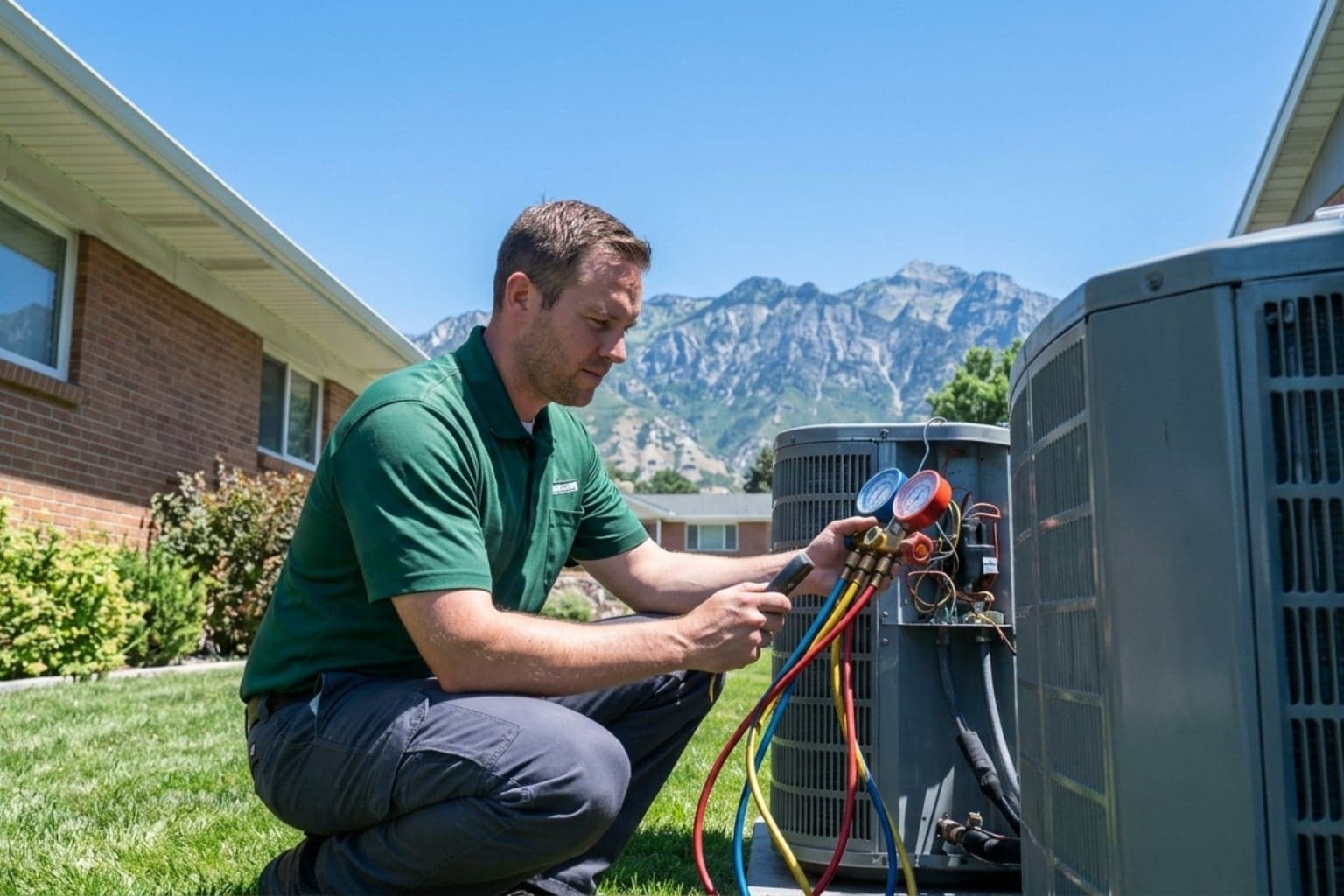
Step 1: Confirm low refrigerant. Measure superheat and subcooling values and compare to manufacturer specifications (adjusted for Salt Lake City's altitude). If values indicate low charge, a leak exists.
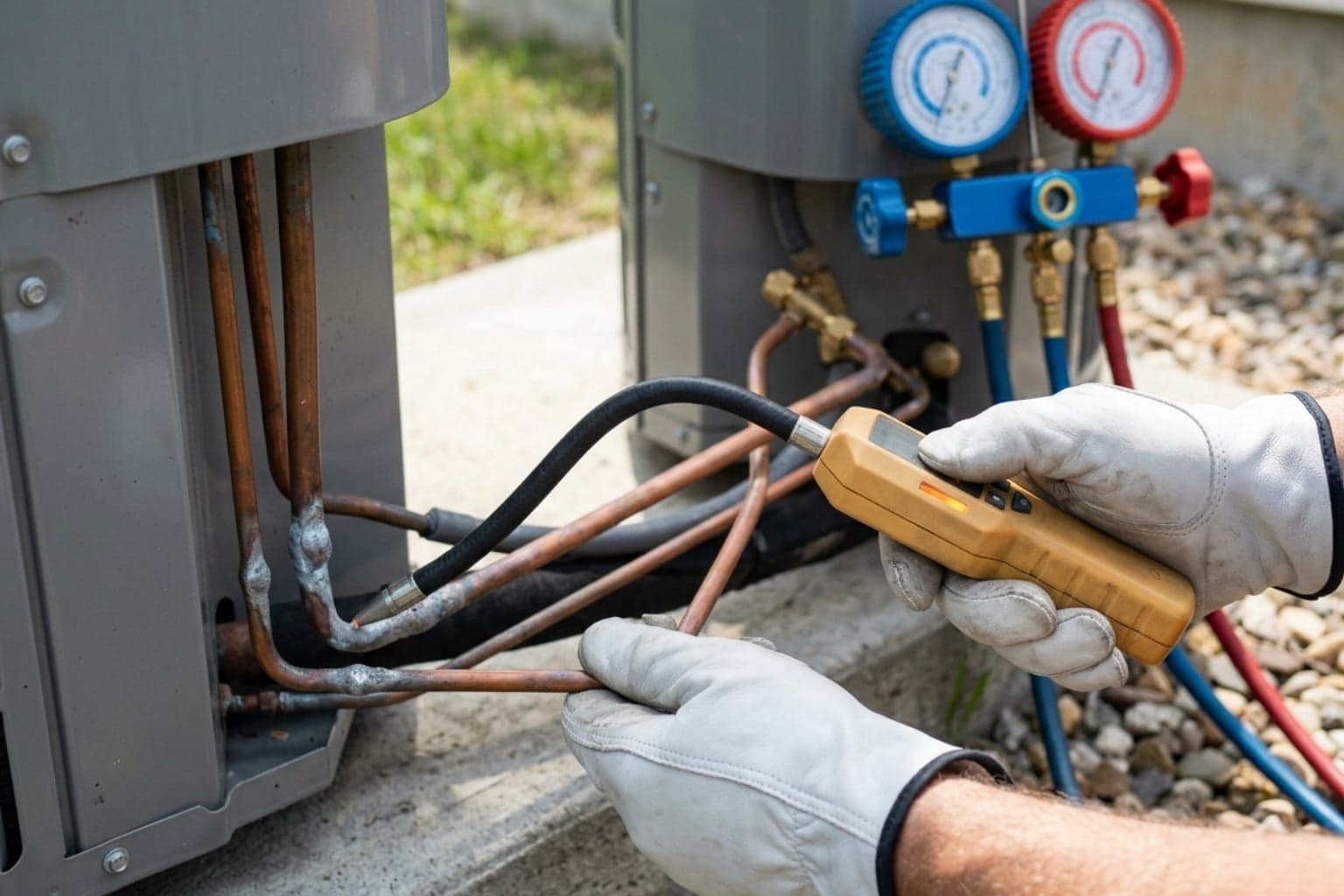
Step 2: Locate the leak. Using electronic leak detectors, UV dye injection, or nitrogen pressure testing depending on the suspected leak location. Electronic detection finds most leaks quickly. Stubborn leaks may require UV dye that circulates with the refrigerant and shows the leak location under ultraviolet light.
Step 3: Repair the leak. Methods depend on location: brazing copper connections, replacing damaged line sections, replacing the Schrader valve core, or replacing a leaking coil if the leak is within the evaporator or condenser.
Step 4: Evacuate and recharge. After repair, the system is evacuated to remove air and moisture, then recharged with the correct amount of refrigerant calibrated for altitude.
Step 5: Verify the repair. The technician monitors the system through multiple cooling cycles and re-checks superheat and subcooling to confirm the repair is holding and the charge is correct.
Refrigerant Leak Repair Costs
Leak detection (electronic or UV dye): $100 to $250
Leak repair at a connection point (brazing): $150 to $400
Schrader valve core replacement: $75 to $150
Evaporator coil replacement (if the coil itself is leaking): $800 to $2,000
Condenser coil replacement (if leaking): $500 to $1,500
Refrigerant recharge (R-410A): $50 to $100 per pound, most systems need 6 to 12 pounds
Refrigerant recharge (R-22): $100 to $200+ per pound. R-22 is no longer manufactured and prices continue to rise. If your system uses R-22, your technician will discuss whether upgrading to a modern R-410A system makes more financial sense.
R-22 vs R-410A: What Utah Homeowners Need to Know
R-22 (Freon) was phased out of production in January 2020 under the Clean Air Act. Remaining supplies are limited and increasingly expensive. If your AC system uses R-22, you have two options: continue repairing and recharging at rising costs ($100 to $200+ per pound and climbing), or replace with a modern R-410A system that uses affordable, readily available refrigerant.
Our partner technicians can identify your refrigerant type during a diagnostic visit and help you evaluate the long-term cost comparison between continued R-22 maintenance and system replacement.